



What Really Happens After Death?
Updated: Jul 25

FEW QUESTIONS stir human curiosity and fear like this one: What really happens after death? It is the oldest mystery of the human race. Is death the end of existence, or the beginning of another journey?
Are the traditional ideas of heaven and hell true—or could there be something far greater awaiting us, hidden in God’s plan?
Why Do Humans Die?
The Bible offers the clearest explanation: “The wages of sin is death” (Romans 6:23). Death entered the world through human disobedience. When Adam and Eve sinned, mortality became the inevitable result of separation from the Source of life—God Himself.
Contrary to what many believe, humans were not created immortal. Genesis 2:7 reveals the true nature of life:
“And the LORD God formed man of the dust of the ground, and breathed into his nostrils the breath of life; and man became a living soul.”
The Hebrew word for “soul” here is nephesh, which simply means a living being. It does not mean an immortal spirit trapped inside a body. Scripture nowhere teaches that man has an immortal soul.
In fact, God says plainly, “The soul that sinneth, it shall die” (Ezekiel 18:4).
Humanity is a soul, a living physical being, subject to death—not an immortal essence that survives it.
When a person dies, the breath of life returns to God who gave it (Ecclesiastes 12:7). The mind ceases activity: “His thoughts perish” (Psalm 146:4).
The Bible repeatedly describes death as sleep—a temporary, unconscious state awaiting awakening (John 11:11–14; Daniel 12:2).
Ancient Beliefs About Death and the Afterlife
The confusion about life after death is ancient. The Egyptians, for instance, believed the soul (ka and ba) left the body and journeyed through the underworld to face Osiris in judgment. They embalmed corpses and built pyramids to ensure the soul’s safe passage into eternity.
Greek philosophers, especially Plato, later taught that man was composed of two parts—an immortal soul and a mortal body. This idea of the soul’s inherent immortality was a cornerstone of Greek dualism.
Sadly, it entered Christian theology centuries later as Hellenistic philosophy mingled with church doctrine during the early centuries after Christ.
The Babylonians and Persians also believed in post-mortem reward or punishment—concepts that influenced Jewish and Christian thought during the intertestamental period.
Yet none of these ideas originated with the Hebrew Scriptures. They were pagan speculations attempting to solve the riddle of death apart from divine revelation.
Today, most mainstream Christianity still echoes these ancient myths, teaching that the righteous go immediately to heaven and the wicked burn forever in hell. But these concepts contradict the plain teaching of Scripture.
Solomon wrote, “The dead know not anything” (Ecclesiastes 9:5), and Peter declared that even King David, a man after God’s own heart, “is not ascended into the heavens” (Acts 2:34).
The Biblical Reality of Death
God’s Word paints a vastly different picture. Death is not a conscious existence—it is a sleep until the resurrection. When Lazarus died, Jesus said,
“Our friend Lazarus sleeps; but I go, that I may awake him out of sleep” (John 11:11).
Christ did not describe Lazarus as living in heaven or hell, but resting, awaiting God’s call to life again. Paul called death “the last enemy” (1 Corinthians 15:26). But Christ defeated that enemy through His resurrection.
Because Jesus rose from the dead, “death no longer has dominion over Him” (Romans 6:9)—and those who belong to Him share that same hope.
The Hope of the Resurrection
The resurrection is the central truth of the Gospel. Without it, Christianity collapses (1 Corinthians 15:17–19). Jesus promised,
“The hour is coming in which all that are in the graves shall hear His voice, and shall come forth; they that have done good, unto the resurrection of life; and they that have done evil, unto the resurrection of judgment” (John 5:28–29).
Scripture reveals two major resurrections. The first resurrection (Revelation 20:6) occurs at Christ’s return, when the faithful saints—those who have obeyed God and overcome sin—are raised to immortality:
“Blessed and holy is he that hath part in the first resurrection… they shall reign with Him a thousand years.”
The second resurrection happens after the Millennium (Revelation 20:12–13), when the rest of the dead—those who never knew the truth—will rise to physical life for the first time.
This is not a time of eternal torment but of mercy and opportunity, called the Great White Throne Judgment. God will open the “books,” or Scriptures, to them so they may learn His truth for the first time (Ezekiel 37:11–14; Revelation 20:12).
The Gift of Immortality
The Bible is clear: immortality is not something we already possess. It is a gift from God, given only through Jesus Christ.
“This mortal must put on immortality, and this corruptible must put on incorruption” (1 Corinthians 15:53).
Eternal life is not the natural state of the human soul—it is God’s reward for faith, obedience, and transformation through His Spirit (Romans 6:23).
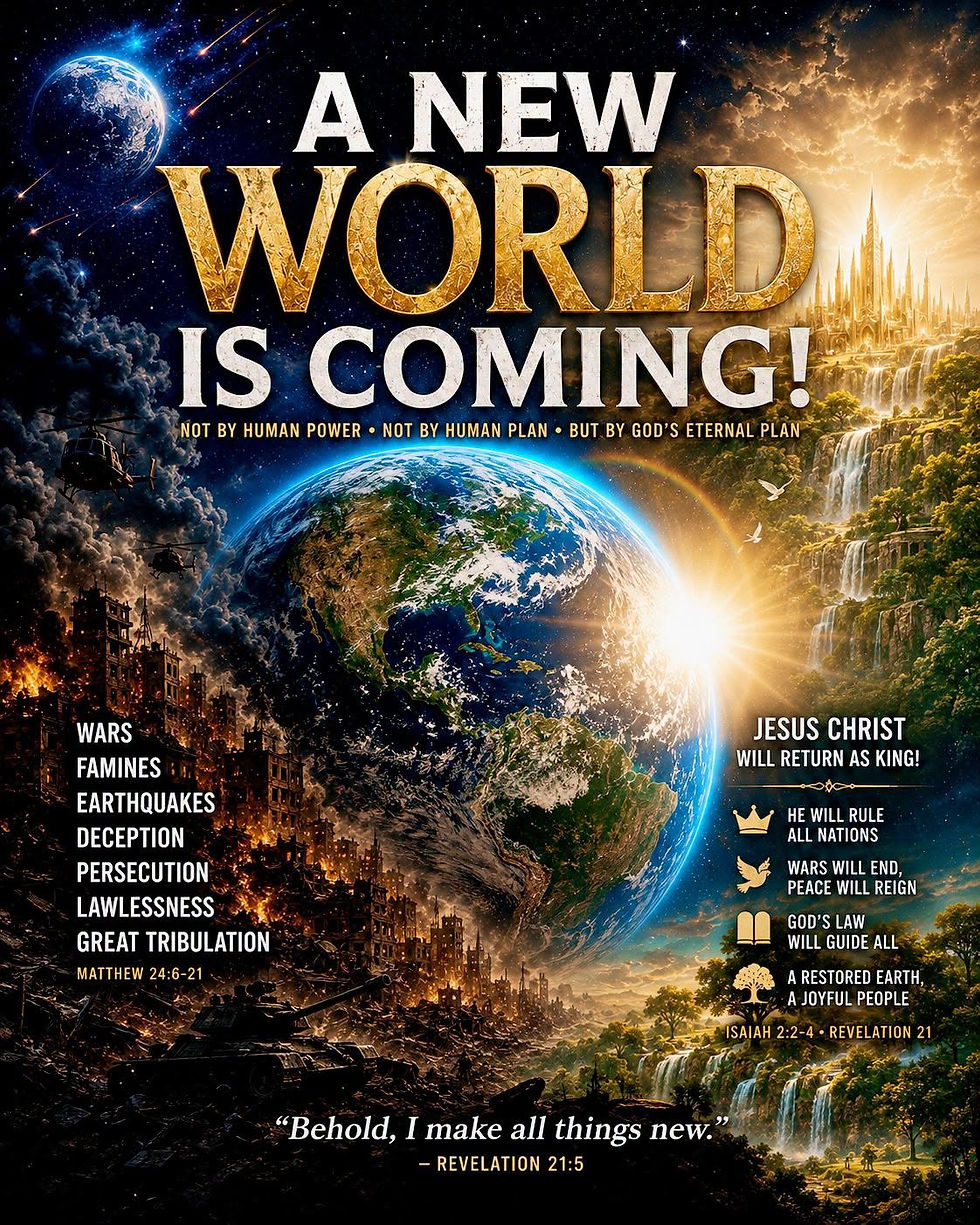
God’s ultimate plan is not to take us to heaven but to bring His Kingdom to earth. “The meek shall inherit the earth” (Matthew 5:5).
When the last enemy—death—is destroyed, God will dwell among men:
“And God shall wipe away all tears from their eyes… there shall be no more death, neither sorrow, nor crying” (Revelation 21:4).
A Hope Beyond Heaven and Hell
The traditional ideas of heaven and hell offer fear or fantasy. The Bible offers truth and hope—a future where every human being will have the chance to live eternally in God’s family.
Death, then, is not the end—it is a rest until the resurrection, when Christ, the Life-Giver, will call His people forth.
“I am the resurrection and the life: he that believes in Me, though he were dead, yet shall he live” (John 11:25).
That is the destiny God offers: not disembodied existence, but glorious immortality—eternal life in His Kingdom, as sons and daughters of the Living God! --Rh.


Comments