


GOD’S FESTIVALS and the SABBATH at Creation

THE Sabbath was not invented at Mount Sinai, nor did God introduce His "appointed times" only after Israel became a nation. Their roots reach much farther back—to creation itself.
Genesis tells us that on the fourth day God placed the sun, moon, and stars in the heavens “for signs and seasons, and for days and years” (Genesis 1:14). The Hebrew word translated “seasons” is moʿadim, a word that mean appointed times or designated assemblies, or meetings.
'THESE ARE MY FEASTS'
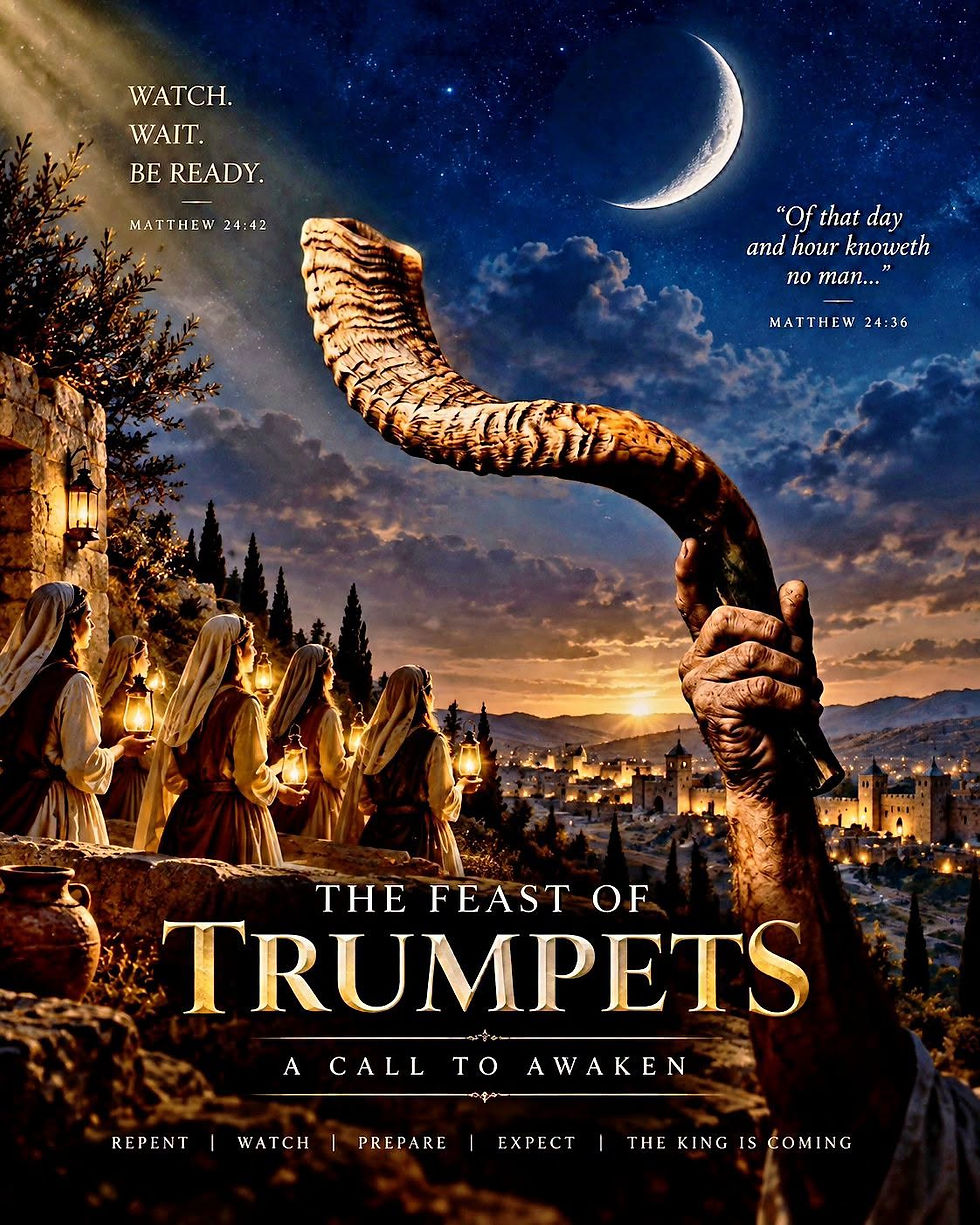
Significantly, the same word appears repeatedly in Leviticus 23, where God introduces His seven annual assemblies or holy days: Passover, Unleavened Bread, Pentecost, Trumpets, Atonement, Tabernacles, and Eighth day.
This connection deserves serious consideration. The heavenly lights were not merely created to illuminate the earth. They also established the framework by which days, months, years, and "appointed times" could be recognized.
Psalm 104:19 declares, “He appointed the moon for seasons (mo'edim (לְמוֹעֲדִ֑ים), which means "appointed feasts," or "festivals"), while Genesis presents the heavenly bodies as instruments for marking God’s calendar.
Then Genesis reaches the seventh day:
“Then God blessed the seventh day and sanctified it.” — Genesis 2:3
BEFORE SIN ENTERED...
Notice the sequence. God blessed and sanctified the seventh day before there was sin, Israel, Sinai, Levitical priesthood, or a system of sacrifices. The Sabbath therefore cannot be explained merely as a ceremonial institution created to deal with sin.
Sin had not yet entered the world.
There was no death to overcome, no sinner requiring atonement, no tabernacle, and no sacrificial system. Creation was still described as “very good” (Genesis 1:31). Yet God deliberately established a holy rhythm of work, rest and festivals.
Jesus later reinforced this creation foundation when He said:
“The Sabbath was made for man, and not man for the Sabbath.” — Mark 2:27
He did not say that the Sabbath was made only for Israel. He grounded its purpose in humanity.
'SHADOWS OF THINGS TO COME'
This distinction also matters when considering the language of “shadow” in Colossians 2:16–17. Paul warns believers about judgments concerning “a festival or a new moon or sabbaths,” describing them as “a shadow of things to come (still in future tense).”
Whatever conclusions one reaches concerning this difficult passage for many, it should not automatically be assumed that Paul declared the festivals and seventh-day Sabbath itself to be a temporary institution that began at Sinai. The immediate context concerns human regulations, worship of angels, judgments, and practices associated with “the body of Christ” (Colossians 2:16–17). The context was, do not let outsiders (or pagans) "judge" or dictate your practices; let the 'body of Christ' (His church) determine.
Moreover, Scripture distinguishes between ceremonial provisions associated with Israel’s sacrificial system and the creation Sabbaths. Hebrews explains that sacrifices could not ultimately remove sin but pointed toward Christ’s superior sacrifice (Hebrews 10:1–14).
FOR MAN'S REDEMPTION
Those shadows served the redemptive purpose of teaching humanity about sin, sacrifice, cleansing, and reconciliation, and the prophetic plan of God.
But the seventh day were "holy" before redemption was necessary.
The same principle invites us to examine God’s festivals carefully. Their meanings certainly illuminate Christ’s work—Passover powerfully portrays redemption through the blood of Christ, Days of Unleavened Bread reinforces the idea of holiness or the putting away sin, Pentecost recalls the giving of God’s Law and Spirit, and Tabernacles anticipates God dwelling with humanity.
Yet their prophetic significance does not necessarily prove that their institution originated only after the Fall. Moreover, the fall festivals of God (like Trumpets, Atonement, Tabernacles) are prophetic and their fulfilment is still future!
A shadow can reveal something about the image, but it never disappears. A shadow is always present whenever lights illuminate the image. The Sabbath can teach us about Christ’s rest (Hebrews 4:9–11) without having been created as a response to sin.
GOD'S SACRED RHYTHMS WITH MAN
The deeper biblical picture is therefore compelling: God’s sacred rhythms precede human rebellion. Creation comes before Sinai. The seventh day comes before the sacrificial system. God’s appointed order begins before the Fall.
The Sabbath is not merely a memorial of something God once commanded Israel. It is a testimony written into the creation story itself—a reminder that time belongs to God, that human beings were created for fellowship with their Creator, and that true rest ultimately finds its deepest meaning in Him.
Before there was sin to redeem, there was a Creator who blessed and sanctified time for an eternal fellowship with Him!

Comments