



The SEVEN (7) PILLARS of Our Faith
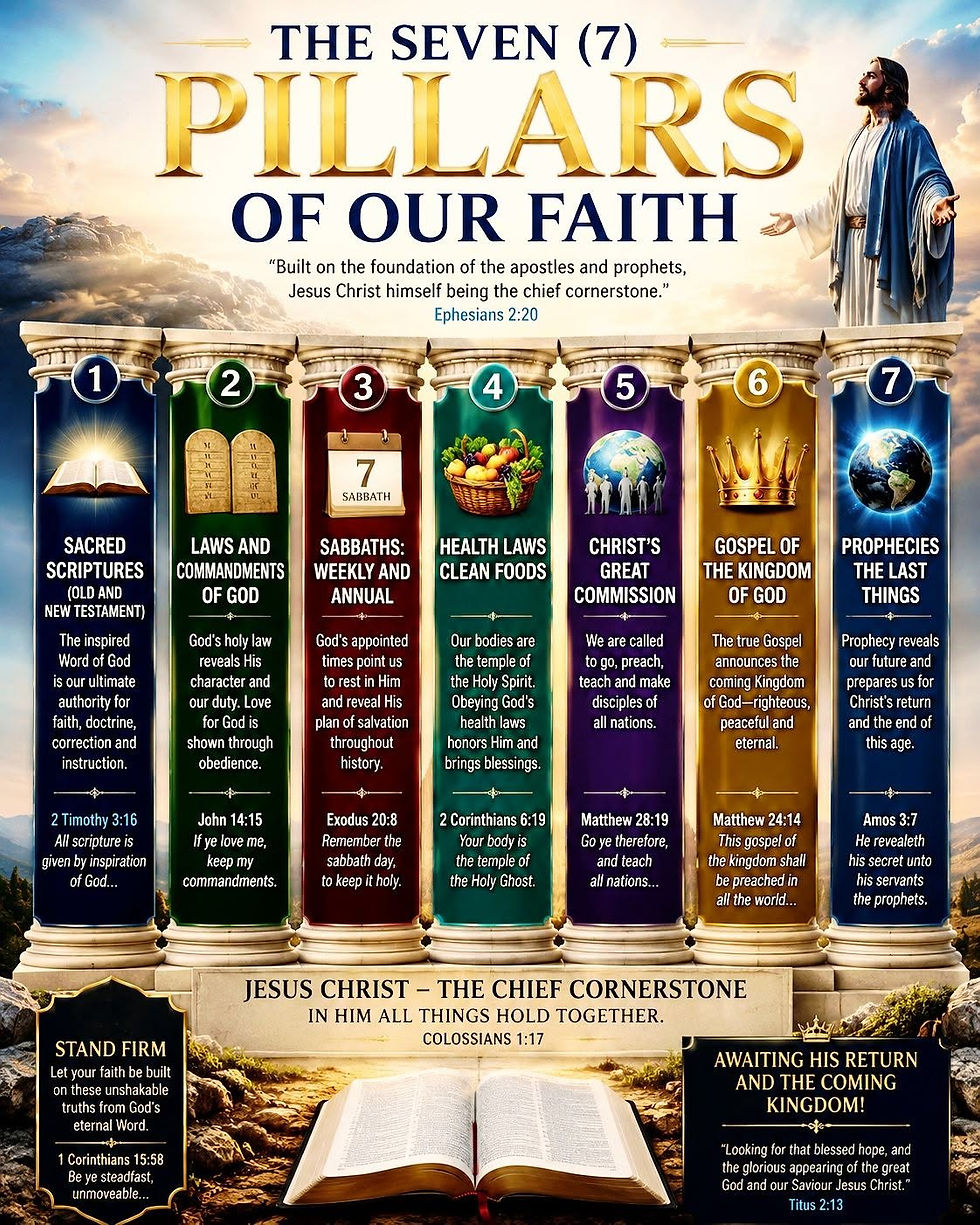
IN a world filled with confusion, shifting morals, and countless religious opinions, true believers must stand upon a strong spiritual foundation. The Church of God is not built on human traditions, philosophies, or changing culture, but upon the eternal truth of God revealed through His Word. These seven pillars form the core foundation of biblical faith and practice. They guide believers toward obedience, holiness, truth, and the coming Kingdom of God.
1. Sacred Scriptures (Old and New Testament)
The Holy Bible is the inspired revelation of God. Both the Old and New Testaments work together harmoniously to reveal God’s plan for humanity. Jesus Christ, the apostles, and the early Church consistently taught from the Scriptures.
“All scripture is given by inspiration of God, and is profitable for doctrine, for reproof, for correction, for instruction in righteousness.” (2 Timothy 3:16)
The Bible is our final authority in doctrine, worship, morality, and salvation. God’s Word does not change because God Himself does not change (Mal. 3:6; Heb. 13:8).
2. Laws and Commandments of God
God’s commandments are not burdensome restrictions but expressions of His holy character. Jesus did not abolish God’s law; He magnified it and taught obedience from the heart.
“If ye love me, keep my commandments.” (John 14:15)
The Ten Commandments remain the standard of righteousness. True grace does not give permission to sin but empowers believers to walk in obedience (Exo. 20: Deut. 5; Matt. 22:37-40).
3. Sabbaths: Weekly and Annual
The seventh-day Sabbath and God’s annual Holy Days reveal His divine plan of salvation. These appointed times were established by God long before human traditions introduced substitutes.
“Remember the sabbath day, to keep it holy.” (Exodus 20:8)
Jesus, the apostles, and the early Church observed these sacred times. The weekly Sabbath points to rest in God, while the annual festivals prophetically picture Christ’s work and the future Kingdom (Lev. 23; 1 Cor. 11:23-27; Acts 2:1-4; Zech. 14:16)
4. Health Laws and Clean Foods
God cares not only for spiritual health but also physical well-being. The biblical distinction between clean and unclean foods remains a timeless principle for His people.
“For ye are the temple of the living God.” (2 Corinthians 6:16)
Obeying God’s health laws promotes discipline, respect for the body, and separation from practices contrary to God’s design (Lev. 11; Deut. 14; Isa. 66:17; 2 Cor. 6:17; Rev. 21:27)
5. Christ’s Great Commission
The Church has a divine mission: to preach the Gospel, teach all nations, and make disciples.
“Go ye therefore, and teach all nations.” (Matthew 28:19)
This commission includes proclaiming truth, warning the world, and helping people come to repentance and faith in Jesus Christ. (Mark 16:15-18; Acts 1:8; Luke 24: 44-49)
6. Gospel of the Kingdom of God
The true Gospel preached by Jesus Christ was the coming Kingdom of God.
“And this gospel of the kingdom shall be preached in all the world.” (Matthew 24:14)
The Kingdom is not merely a feeling in the heart; it is the future government of God that will rule the earth in righteousness, peace, and justice under Jesus Christ (Mark 1:14-15; Luke 4:43; Matt. 4:23, 9:35)
7. Prophecies and the Last Things
Bible prophecy reveals where the world is heading and prepares believers for Christ’s return. Wars, moral collapse, deception, and global instability confirm the accuracy of Scripture.
“Surely the Lord GOD will do nothing, but he revealeth his secret unto his servants the prophets.” (Amos 3:7)
Prophecy is not meant to create fear but faith, urgency, and spiritual readiness. (Joel 2:28; Matt. 24; 2 Tim. 3:1-5)
These seven pillars are not man-made doctrines. They are rooted in the eternal Word of God. Those who build their lives upon these truths will stand firm in a world of compromise and spiritual darkness, awaiting the glorious return of Jesus Christ and the establishment of the Kingdom of God on earth.


Comments