



What Is TRUE FREEDOM? Lessons from Timothy

IN A WORLD that defines freedom as the ability to do whatever one desires, the Bible presents a radically different picture. Modern culture often celebrates self-expression, pleasure, and independence from rules as the highest form of liberty.
Yet Scripture teaches that many who believe they are free are actually enslaved: enslaved to sin, pride, lust, anger, greed, and the desires of the flesh.
The life of Timothy reveals a deeper and more powerful definition of freedom.
Timothy was raised in the city of Lystra by a faithful Jewish mother, Eunice, and grandmother, Lois, who taught him the Holy Scriptures from childhood (2 Timothy 1:5; 3:15). Though young, timid, and surrounded by pagan influences, Timothy chose a life of discipline, humility, and obedience to God.
When the Apostle Paul encountered him, Timothy willingly left behind personal ambitions and comforts to become a servant of Christ and an assistant in the work of the Gospel.
To many, such a life might appear restrictive. Traveling through hardships, persecutions, imprisonments, and constant labor does not resemble the world’s idea of freedom. Yet Timothy discovered something profound: true liberty is not found in pleasing the self, but in surrendering the self to God.
The Apostle Paul repeatedly warned believers that human nature fights against God’s Spirit. In Galatians 5:17, he explains that “the flesh lusts against the Spirit, and the Spirit against the flesh.” Human desires naturally resist God’s law because the carnal mind seeks temporary gratification rather than righteousness.
A person may claim freedom while living according to sinful impulses, but Jesus Christ taught that “whoever commits sin is a slave of sin” (John 8:34).
Sin promises liberty but produces bondage.
Addictions, immorality, hatred, envy, greed, and rebellion all begin as acts of “personal freedom,” yet they ultimately control and destroy lives. Proverbs 14:12 warns, “There is a way that seems right to a man, but its end is the way of death.”
Timothy understood that freedom required self-control. Paul instructed him, “Discipline yourself for the purpose of godliness” (1 Timothy 4:7). Rather than allowing the flesh to rule him, Timothy learned to bring his life into subjection to Christ. This reflects Paul’s own example: “I discipline my body and bring it into subjection” (1 Corinthians 9:27).
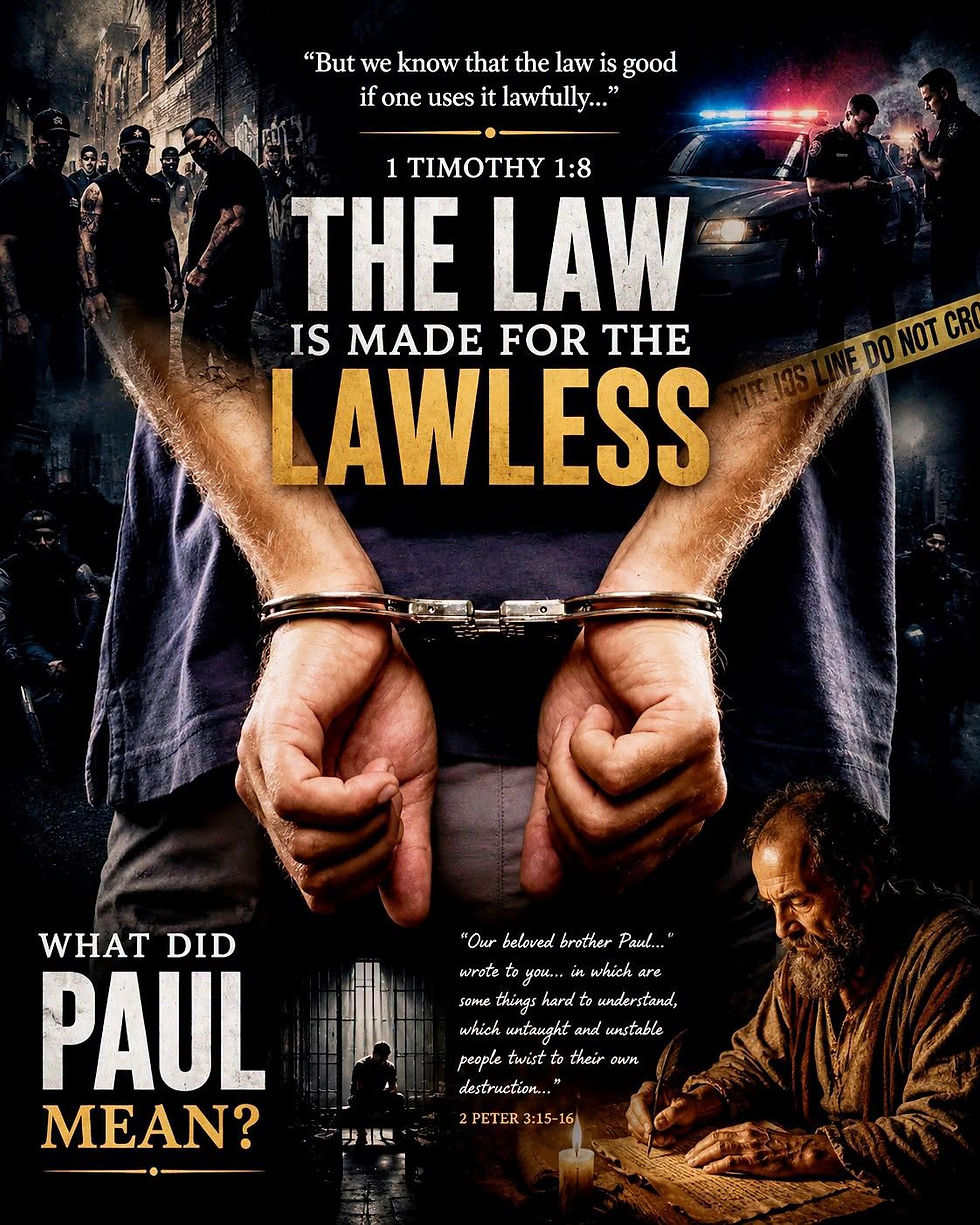
Biblical freedom, therefore, is not freedom from God’s commandments — it is freedom from the slavery of sin. It is the liberty to obey God, walk in the Spirit, and live according to truth. James even calls God’s law “the perfect law of liberty” (James 1:25).
The world says, “Follow your heart.” God says, “Guard your heart” (Proverbs 4:23).
The world says freedom is doing whatever feels good. Scripture teaches that true freedom comes when Christ delivers us from the power of sin and teaches us to live righteously. As Paul declared in Galatians 5:1: “Stand fast therefore in the liberty by which Christ has made us free.”
Freedom to sin is still slavery.
Freedom from sin through Jesus Christ is true freedom.

Comments